
 Posted by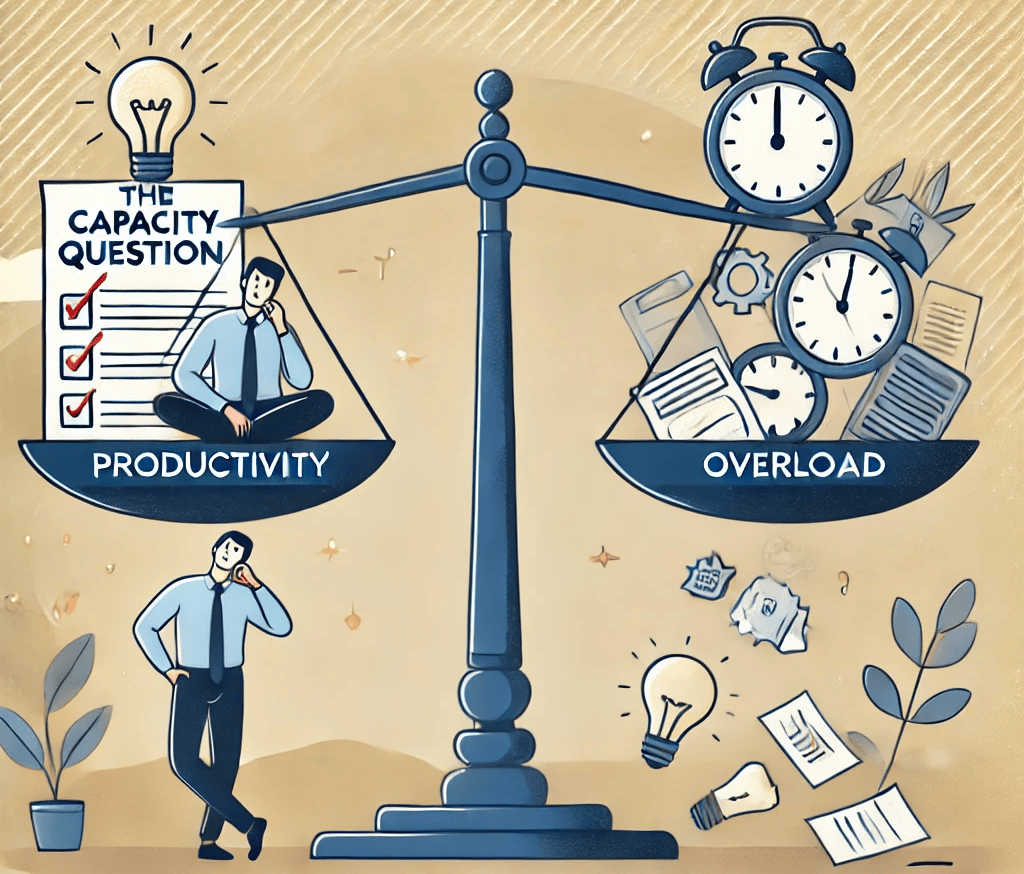
For more information, visit OpenAI’s website.
I love being a member of Toastmasters International. In fact, I value it so much that I sometimes I risk overloading myself with my volunteer commitments as a Toastmaster. I also belong to four clubs, but recently I acknowledged the importance of balancing effectiveness with overload, and I decided to end my membership with my fourth Toastmasters club.
In this article, I will discuss the importance of having balance in your life and the value of answering the question: “Do you have the capacity?” This was a question a friend once asked me when I was thinking of taking on the role of president for my condo board.
Do you have the capacity?
When my friend asked me this question, I was currently serving as an officer for both my Toastmasters club and district. Taking on the role of president for my condo board would add more responsibilities to my already busy life. By asking me the capacity question, my friend was asking me to carefully weigh the balance between effectiveness and overload in my life.
When you are thinking of taking on a volunteer position or a personal project, take time to carefully evaluate your current commitments. Be honest with yourself and determine if you have the capacity to fit this new role or project into your life. If this new initiative would stretch your already limited time and resources too far, then the right answer may be to turn down the new project or volunteer opportunity so you don’t experience burnout by taking on too much in your life.
When I carefully reviewed my existing responsibilities as a club and district officer, I realized that I did not have the time or energy necessary to handle serving as president for my condo board in addition to my existing commitments. As much as I wanted to take on this role, I realized I did not have the capacity to be effective in this role, so I chose not to serve as condo board president.
Understanding Your Capacity Limits
Capacity is finite and varies based on factors like physical energy, emotional resilience, and time availability. Evaluate your workload realistically to identify when you’re nearing your limits, as ignoring them can lead to burnout and decreased effectiveness.
For example, as I mentioned at the beginning of this article, I am a member of four Toastmasters clubs, or at least I was until I decided to end my membership with my fourth club. When I evaluated my workload, I realized that being in four clubs, plus serving as an officer for my club and district, was too much. This was leading to a situation where I would have meetings 4 out of 5 evenings a week. This was not leaving me enough time for important things like rest and relaxation outside of the time I was working on my projects and responsibilities.
As much I valued being in this fourth club, I found that I needed to reduce the amount of time I was spending on Toastmasters projects and meetings so I could find more balance in my life and so I could avoid overburdening myself. By ending my membership with this club, I reduced the overload on my existing capacity and freed some of my time so I would have more capacity for handling my existing responsibilities.
Strategies for Balancing Effectiveness and Overload
Your own challenges will be different from mine, but you may also face the same struggle to balance effectiveness with overload. To find balance in your life, I recommend the following strategies:
- Prioritize tasks based on importance and impact, and delegate when possible to manage workload effectively.
- Incorporate self-care, set boundaries, and schedule downtime to maintain energy and productivity without compromising your well-being.
You will have many commitments, goals, and responsibilities in your life. Choosing which of these to act on will come down to what you value most. You can assess your priorities to determine what is most important to you and what will have the greatest impact on your life. This will help you choose which commitments and projects to follow through on, and it will help you to decide whether you have the capacity to take on a new project or responsibility.
Taking care of yourself is also important. Outside of your goals, responsibilities, and commitments, you need to leave time to recharge your batteries and to ensure you don’t compromise your health. If you are always on the go and you don’t schedule time for rest and relaxation, you risk facing burnout.
Conclusion
When I chose to end my membership with my fourth Toastmasters club, I was choosing to reduce the overload in my life and to help reduce my chances of burning out. As much as I love being a member of Toastmasters, being in four clubs was too much.
When I asked myself the question: “Do you have the capacity?”, the answer was that I was pushing myself beyond reasonable limits in my life and I no longer had the capacity to manage all my responsibilities and commitments.
The question you must ask yourself is: “Do you have the capacity?”. Evaluate all your commitments and responsibilities and decide if you have overburdened yourself. If you have, make the hard decision by giving up responsibilities and commitments that no longer serve you. I did this by ending my membership with my fourth Toastmasters club.
If you have too many volunteer commitments in your life, you can do the same. Or there may be a hobby or personal project you can give up if it puts too much stress on your life and is leading to burnout.
Remember the importance of balancing effectiveness and overload in your life. Be careful that you don’t take on too much and experience burnout. Remember to give yourself time for rest and relaxation in addition to finding time for work and volunteering.